SATCOM Timing
Satellite terminal reference clocks engineered for EVM margin, vibration environments, and power budgets
Reference clock selection for a satellite terminal is a system-level design decision, not a single-spec comparison. Phase noise, multiplied up the frequency chain, directly compresses EVM margin for high-order modulation; mechanical vibration converts to sidebands through g-sensitivity, threatening link quality on SOTM vehicular, airborne, and maritime platforms; power consumption and warm-up time determine whether an always-on architecture is feasible. Taitien addresses the two critical paths separately: ultra-low-power OCXOs for the timing core, and low g-sensitivity OCXOs for the RF LO reference path. Applications cover fixed, SOTM vehicular, airborne Ku/Ka, and maritime satellite terminals, as well as station timing references for gateways and teleports.
- Ultra-low-power OCXO platform: up to 80–90% lower power vs legacy designs for always-on terminal architectures
- Low g-sensitivity OCXOs: suppressing vibration sidebands to protect RF LO path spectral purity
- Ultra-compact low g-sensitivity TCXOs: down to 3.2 x 2.5 mm for LEO satellite communications and GNSS positioning
- Low phase noise design: protecting EVM margin for high-order modulation
- Fast warm-up and holdover: shorter time-to-service and link continuity through GNSS outages
Related Categories
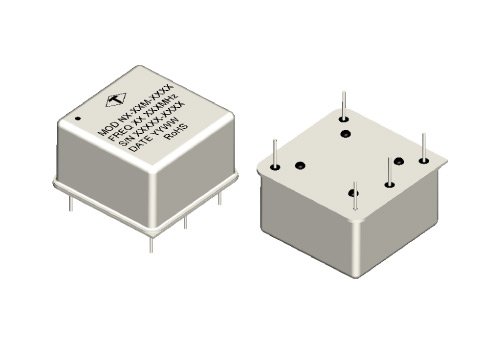
NP-100M-7000
20.6 x 20.6 mm
100 MHz
Sine Wave
-150 dBc/Hz @ 1kHz
±100 ppb @ -40°C to +85°C
Power Consumption 120 mW


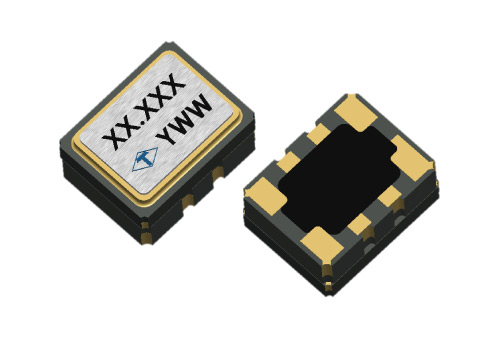
TP
3.2 x 2.5 mm VCTCXO
10 to 52 MHz
CMOS/Clipped Sine Wave
-145 dBc/Hz @ 1kHz
±0.05 ppm @ -20°C to +70°C
0.3 ppb/g

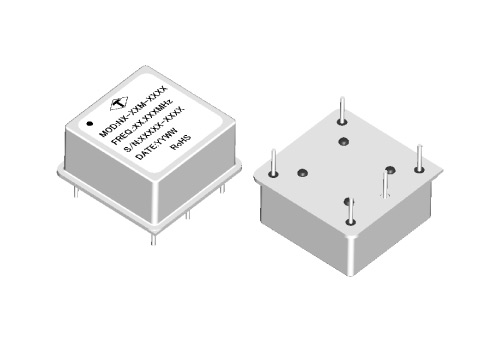
NA-100M-6700
25.4 x 25.4 mm
100 MHz
Sine Wave
-160 dBc/Hz @ 1kHz
±100 ppb @ -40°C to +85°C
0.05 ppb/g

NF-10M-7000
20 x 14 mm
10 MHz
CMOS
-125 dBc/Hz @ 10Hz
±10 ppb @ -40°C to +85°C
Power Consumption 150 mW
NP-10M-7000
20.6 x 20.6 mm
10 MHz
CMOS
-125 dBc/Hz @ 10Hz
±10 ppb @ -40°C to +85°C
Power Consumption 120 mW

TT-L
7 x 5 mm VCTCXO
10 to 52 MHz
CMOS/Clipped Sine Wave
-149 dBc/Hz @ 1kHz
±0.5 ppm @ -40°C to +85°C
0.3 ppb/g